
Electric Fence for Predators: The Secondary Benefits Beyond Keeping Coyotes Out
What predator-proof electric fencing does beyond stopping coyotes: lower stress, rotational grazing, poultry and beehive protection, and California cost-share.
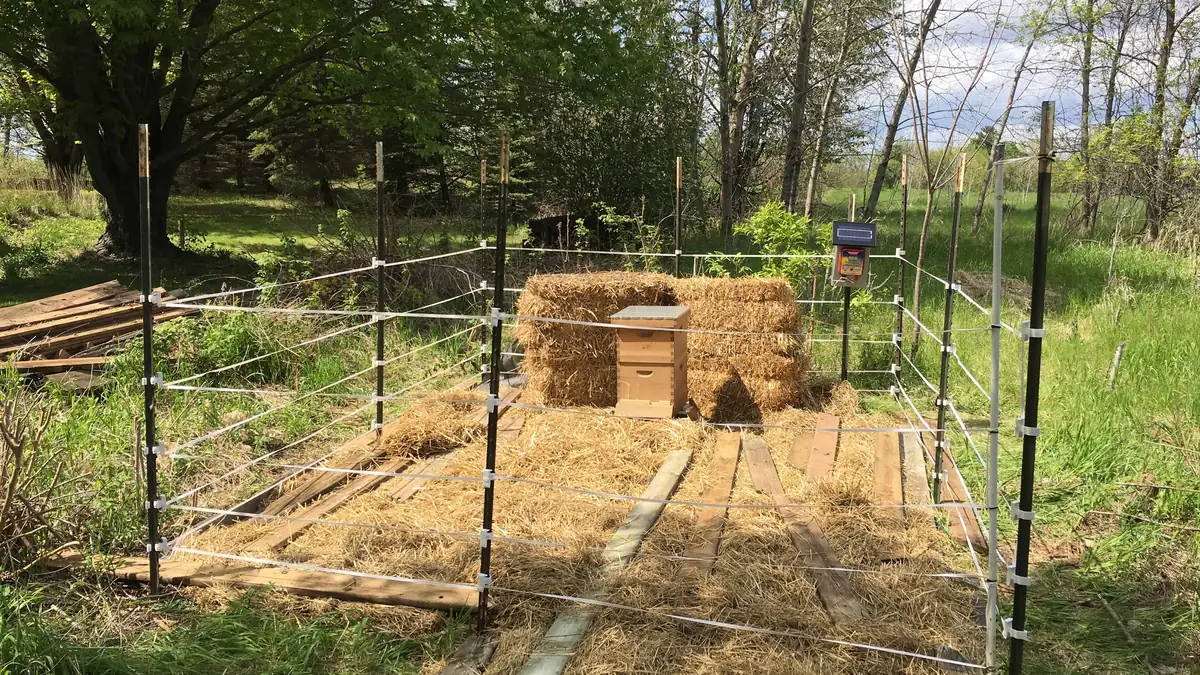

Most ranchers string a predator fence for one reason: to stop the next dead calf or lamb. That is reason enough. But research and Extension guidance point to a set of second-order benefits that rarely make it into the cost math: calmer animals, more flexible grazing, room for sheep, goats and poultry, protected beehives and gardens, and a legal and social position that is easier to defend. This guide looks at each one, separates what the evidence shows from what it only suggests, and notes the trade-offs Extension specialists warn about.
A companion guide, Best Electric Fence for Rotational Grazing, covers the hardware: energizer sizing, polywire, posts, reels and grounding.
First, the size of the problem
Predators are a small share of total livestock deaths, but a concentrated one. USDA's most recent national cattle death-loss study found that in 2015 predators accounted for 2.4% of adult cattle losses and 11.1% of calf losses. The calf share had risen from 3.2% in 1990. Coyotes were the top known predator, responsible for 40.5% of predator-caused cattle deaths and 53.1% of predator-caused calf deaths (USDA APHIS, Death Loss Trends in the U.S. Cattle Industry, 1990–2015).
Sheep producers carry far more of the burden. In 2014, U.S. sheep and lamb deaths totaled about 585,000 head, worth about $102 million. Predators caused 28.1% of adult sheep deaths and 36.4% of lamb deaths. Coyotes and dogs were the top two causes for both (USDA APHIS, Sheep and Lamb Predator and Nonpredator Death Loss, 2015).
California follows the same pattern. Using USDA data, UC Agriculture and Natural Resources reports that predators caused about 1.1% of mature beef cattle deaths and 5.8% of calf deaths in 2015, but 19.0% of mature sheep deaths and 45.3% of lamb deaths in 2014 (UC ANR Publication 8598, Livestock Protection Tools for California Ranchers).
Fencing is already the most common nonlethal tool among sheep producers. In 2014, 54.8% of sheep operations used fencing for predator control, ahead of guard dogs (40.5%), lamb sheds (34.4%) and night penning (33.7%) (USDA APHIS, 2015). Cattle operations lag far behind. Only 19.0% used any nonlethal method in 2015, and 6.1% used fencing (USDA APHIS, 1990–2015).
1. Less stress in the herd, and why it may show up on the scale
The direct loss of an animal is easy to count. The indirect cost is harder to see, and that is where some of the most interesting research sits.
Fear changes cattle physiology. In an Oregon State University experiment, researchers exposed cows to a simulated wolf encounter: wolf urine on the pen fence, recorded howls, and three leashed dogs walked along the perimeter. Cows from an Idaho herd with a history of wolf predation bunched in the far corner of the pen for the whole 20 minutes, and their temperament scores, plasma cortisol and body temperature rose. Cows from a wolf-free herd stayed spread out and showed no change (Cooke et al., Journal of Animal Science; summary in OSU Extension EM 9142, Wolves: A Primer for Ranchers). A follow-up study found brain and blood markers in the wolf-experienced cows that the authors associated with PTSD-like stress disorders (Journal of Animal Science, 2017).
Attacks can cost weight across the herd, not just the animal killed. University of Montana economists studied calf weights from 18 western Montana cow-calf ranches from 1995 to 2010. They found no measurable effect from wolves simply living on the same landscape. But in years when a ranch had a confirmed wolf kill, its average calf weight fell by about 22 pounds. At the 2010 price of $1.15 per pound, the researchers estimated an average loss of about $6,679 per affected ranch from lighter calves, more than seven times the roughly $900 per animal Montana's loss board was paying for a confirmed kill (Ramler et al., American Journal of Agricultural Economics, 2014; University of Montana summary).
What this does and does not prove. These studies show that predator encounters stress cattle and that depredation events cost weight. No study found for this guide directly measured better weight gain or conception rates because a fence was installed. The reasonable inference is narrower: a fence that prevents attacks also prevents the stress and weight loss that attacks cause. Ranchers should treat any production gain as plausible but unproven for their own operation.
2. A predator fence is also a grazing fence
The same electrified wire that turns a coyote can split a pasture. UC Cooperative Extension's electric fence fact sheet notes that portable electric fencing "works great for intensive rotational grazing systems on irrigated pastures" and can also help control grazing in sensitive areas, while it protects livestock from bears, coyotes and wolves (UCCE Livestock Protection Tools Fact Sheet No. 4, Electric Fence).
Once a ranch has a reliable energizer and ground system, adding cross-fences for a rotation costs relatively little. Some predator-protection practices also push in the same direction as good grazing. UC ANR lists shifting birthing calendars, moving lambing or calving away from predator habitat, and management that changes livestock behavior among the husbandry tools that reduce conflict (UC ANR 8598).
There is a catch, and Extension specialists name it directly. Confining livestock inside a predator-proof fence can bring "inefficient use of forage resources, problems with livestock disease control, reductions in wool or mohair quality, and increased labor" (UC ANR 8598, citing Wilbanks 1995). The answer is to plan the paddocks and recovery periods before building. Regrarian Resource's Your First Grazing Plan in One Afternoon walks through that step.
3. Room for sheep, goats and pastured poultry
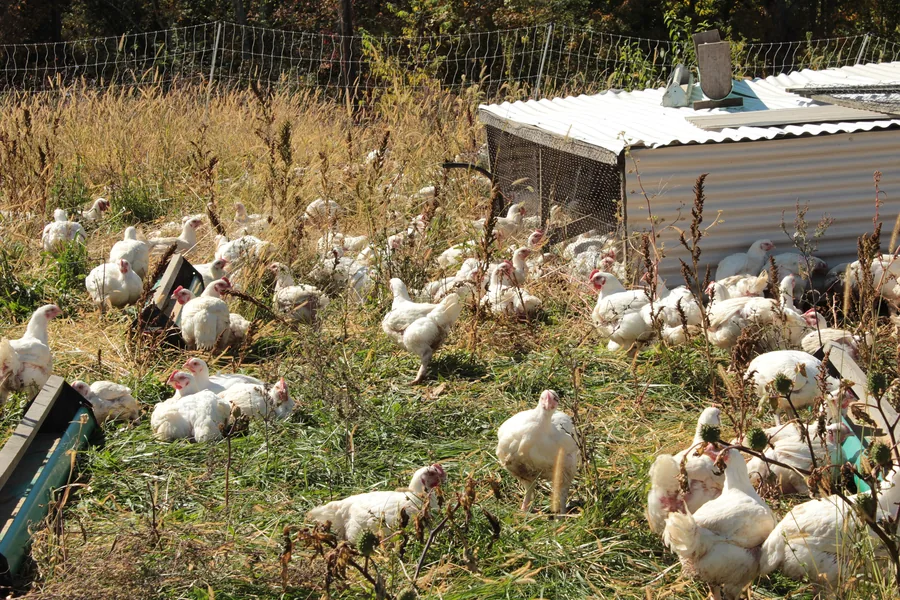

For many diversified operations, predators are the main barrier to adding small ruminants or birds. Electric fencing lowers that barrier.
- Sheep and goats. UCCE describes electric netting as effective for small ruminants and poultry (UCCE Fact Sheet No. 4). The Sheep 101 educational site notes that net and high-tensile electric fences "will aid in keeping predators out," and that fencing is "particularly effective when incorporated with other methods of predator control, such as livestock guardians" (Sheep 101: Predators).
- Pastured poultry. University of Maryland Extension reports that many growers using moveable poultry housing keep birds on pasture protected by fencing, often electric. Electric poultry netting "may work well for containing the flock and offer some protection against ground predators, provided an adequate charge is maintained throughout the entire fence line" (UMD Extension FS-1132).
Two limits apply. Electric netting does nothing against hawks and owls, which are federally protected and need overhead deterrents or shelter. And Maryland's guidance still calls a predator-proof coop at night the most important line of defense (UMD Extension FS-1132).
4. Guardian animals work better with a fence
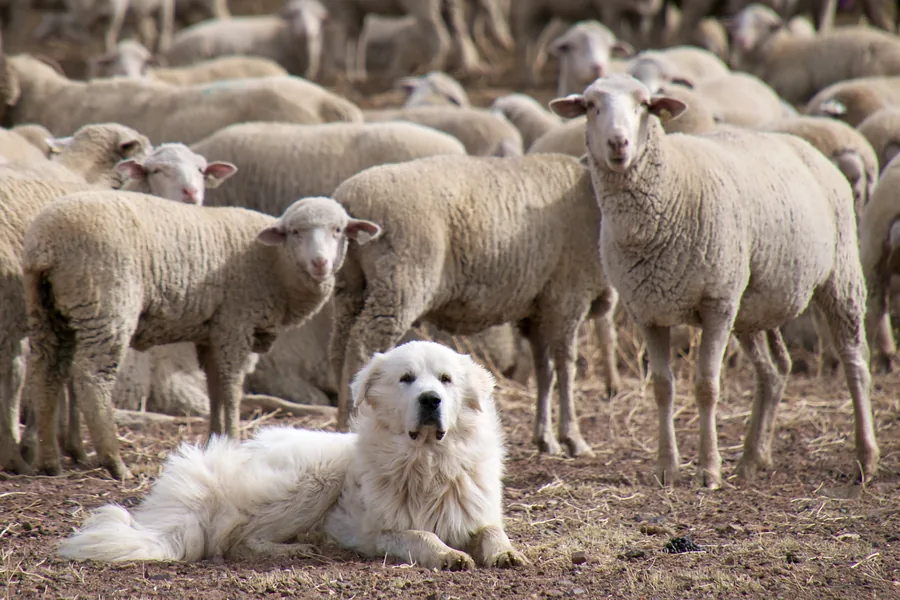

Fences and guardian animals cover each other's weak spots. UC ANR describes the strongest setups as layered: "baseline preventative husbandry techniques (livestock guardian animals and electric fencing, for example) supplemented with deterrents (fladry or sound-light devices) during key production periods" (UC ANR 8598, citing Miller et al. 2016). The same publication notes that nonlethal tools work best applied before predation starts, tailored to the site, and in combination.
A fence also helps keep the guardian home. University of Maryland Extension warns that guardian dogs "need secure fencing as they tend to roam" (UMD Extension FS-1132). A roaming dog protects nothing and can create problems with neighbors.
For wolf country, UC ANR reports that turbo fladry (flagging electrified with a standard fence energizer) may be 2 to 10 times more effective than non-electrified flagging. Wolves can still habituate to it over time, so it works best as a short-term tool during calving or other high-risk periods (UC ANR 8598, citing Lance et al. 2010 and Musiani et al. 2003).
5. Protecting beehives, gardens and orchards
The energizer that guards the herd can also cover the farm's other high-value spots.
Beehives and bears. A meta-analysis of 77 cases from 48 publications found electric fences among the most effective tools against bear damage to livestock, crops, beehives and trees, cutting damage by 79.2% to 100% (95% confidence interval). By comparison, the effectiveness of shooting bears declined over time (Khorozyan and Waltert, Scientific Reports, 2020). In Michigan, researchers tested four temporary fence designs to protect mobile apiaries from black bears. Only one was 100% effective: three polytape strands charged to 5,000 volts at 0.58, 0.39 and 0.23 meters (about 23, 15 and 9 inches) above the ground (Otto and Roloff, Human–Wildlife Interactions, 2015). Proper construction and maintenance were critical.
Gardens and orchards versus deer. North Carolina's wildlife agency notes that deer can jump 7 feet or more, so a truly "deer proof" barrier needs to be 8 feet or taller and built of welded wire or similar material. Electric fences are not deer proof, but they can be an effective and cheaper deterrent because deer have poor depth perception. Two effective designs are two single-strand electric fences, each 2 feet tall and set 5 feet apart, or a multi-strand fence angled outward at 45 degrees. Both need ongoing maintenance, and the first days, weeks and month after installation, while the deer's feeding habit is being broken, matter most (NC Wildlife Resources Commission, Fencing to Exclude Deer).
6. Keeping livestock off the road
A fence built tight enough to stop a coyote also keeps cattle in. That has a legal side. California Food and Agricultural Code section 16902 bars an owner from willfully or negligently letting livestock stray onto, or remain unattended on, a public highway where both sides of the road are fenced or otherwise separated from adjoining property. Section 16904 says that, in a lawsuit over a vehicle-livestock collision, there is no automatic presumption that the owner was negligent (California Food and Agricultural Code, Chapter 6). Reasonable care still matters, and a maintained fence is part of that record. Rules differ by state and county (open versus closed range), so this is not legal advice.
7. Fewer lethal-control decisions
Electric fencing gives ranchers an option that does not depend on removing predators. UC ANR's review notes that targeted lethal removal of a predator responsible for a specific attack can be effective at the ranch or watershed scale, but has little effect at the county or regional scale. Indiscriminate lethal control may not have lasting effects (UC ANR 8598). The bear meta-analysis above found the same pattern for shooting, with benefits that faded over time (Khorozyan and Waltert, 2020).
Nonlethal programs are not a cure-all, though. In 2001, Marin County, California, replaced its federal Wildlife Services predator control program with a county-run program that cost-shared fencing, guard animals and other nonlethal methods for sheep producers. A 2016 survey, 15 years in, found coyote predation still a high concern. Five producers had left the sheep business, and the remaining producers were generally dissatisfied with the program. The authors recommended more funding for management practices, payment for losses, and seasonal wildlife specialists during lambing (Larson, McGranahan and Timm, Human–Wildlife Interactions, 2019). Fencing works best as one well-maintained layer among several.
8. Help paying for it (California focus)
Funding changes often. Everything below was checked on November 11, 2026, and each program should be confirmed with the agency before planning around it.
- NRCS EQIP, Fence (Practice 382). Fence is an NRCS conservation practice that EQIP can cost-share as part of a conservation plan (NRCS Fence 382). See Regrarian Resource's EQIP application guide and grant calendar.
- NRCS California Livestock-Predator Interaction Management Initiative. In 2025, NRCS California ran a sign-up for producers in 16 counties: Butte, Del Norte, Fresno, Humboldt, Lassen, Mendocino, Modoc, Nevada, Placer, Plumas, Shasta, Sierra, Siskiyou, Tehama, Trinity and Tulare. It supported non-lethal management, especially for wolves. Listed practices included high-tensile electric fence (382), turbo-fladry (645), virtual fence (382 with Grazing Management 528), emergency animal mortality management (368) and grazing management (528). The 2025 application deadline was extended to June 13, 2025 (NRCS California announcement; initiative fact sheet). Whether it reopens for 2026 or 2027 was not announced as of this check.
- CDFW Wolf-Livestock Compensation Program. California's 2021 pilot program paid for direct losses, nonlethal deterrents and "pay for presence." It awarded 109 grants in Siskiyou, Lassen, Plumas and Tulare counties before funds ran out in March 2024. As of this check, CDFW is accepting direct-loss claims only and is not seeking nonlethal deterrent applications. The program is being re-evaluated with stakeholders in 2026 (CDFW Wolf-Livestock Compensation Grants).
- USDA APHIS Wildlife Services. Wildlife Services offers producers advice and site visits. Specialists investigate predation evidence, examine property fences and suggest ways to make existing tools more effective (USDA APHIS, How Wildlife Services Works with Livestock Producers).
- FSA Livestock Indemnity Program (LIP). NRCS California's initiative materials point producers to LIP for qualifying losses (initiative fact sheet).
A note on collars: virtual fencing can move and hold cattle, but it does not physically or electrically block a predator from entering. Ranchers comparing systems can use the Virtual Fence Buyer's Guide.
Making a predator fence actually work
Every benefit above depends on a fence that stays hot. UC ANR traces fence failures to dry soil combined with poor installation, wires grounding out on vegetation or on themselves, and weak ground systems (UC ANR 8598). A few specifics from the same sources:
- Height and gaps matter for coyotes. An adult coyote can squeeze through a 4-by-6-inch opening in woven wire and can climb or jump fences under 66 inches. Woven wire works better with electrified top and trip wires. A late-1970s study found a 12-wire fence, with alternating hot and grounded wires plus an offset hot trip wire outside, to be "coyote proof" (UC ANR 8598).
- Ground it properly. UCCE recommends 6-foot ground rods set 10 feet apart in moist soil, plus another ground rod every 1,500 feet on longer fences (UCCE Fact Sheet No. 4).
- Know where fencing pays best on its own. UC ANR finds fencing as a stand-alone tool most useful and cost-effective on small, level, relatively open pastures. Larger, rougher country usually needs guardian animals, herding or other tools layered on top.
The Grazing & fencing section of the Regrarian Resource library lists fencing suppliers, linked plainly with no commission:
- Gallagher: energizers, polywire, reels and eShepherd virtual fencing
- Kencove: a wide electric fencing catalog with how-to content
- Pasture Systems: a grazier-run fencing and water supply shop
- Zareba Systems: budget chargers and supplies
The bottom line
Predator-proof electric fencing is usually justified by the animals it saves. The evidence suggests it also heads off post-attack stress and weight loss, doubles as grazing infrastructure, makes small stock and poultry practical, backs up guardian animals, and protects hives and gardens. It has real trade-offs (labor, forage use and maintenance), and cost-share programs come and go. It pays best when planned as part of the grazing system, not as a one-purpose barrier.
Sources
- USDA APHIS: Death Loss Trends in the U.S. Cattle Industry, 1990–2015; Sheep and Lamb Predator and Nonpredator Death Loss in the United States, 2015; How Wildlife Services Works with Livestock Producers
- UC Agriculture and Natural Resources, Publication 8598: Livestock Protection Tools for California Ranchers (2018)
- UC Cooperative Extension, Livestock Protection Tools Fact Sheet No. 4: Electric Fence (2019)
- Cooke, R.F., et al., Wolf presence in the ranch of origin: impacts on temperament and physiological responses of beef cattle following a simulated wolf encounter, Journal of Animal Science; Effects of a simulated wolf encounter on brain and blood biomarkers of stress-related psychological disorders in beef cows, Journal of Animal Science (2017); OSU Extension EM 9142
- Ramler, J., et al., Crying Wolf? A Spatial Analysis of Wolf Location and Depredations on Calf Weight, American Journal of Agricultural Economics (2014); University of Montana summary
- Khorozyan, I., and Waltert, M., Variation and conservation implications of the effectiveness of anti-bear interventions, Scientific Reports (2020)
- Otto, T.E., and Roloff, G.J., Black Bear Exclusion Fences to Protect Mobile Apiaries, Human–Wildlife Interactions (2015)
- Larson, S., McGranahan, D.A., and Timm, R.M., The Marin County Livestock Protection Program: 15 Years in Review, Human–Wildlife Interactions (2019)
- University of Maryland Extension, Identifying and Preventing Poultry Predators in the Mid-Atlantic Region (FS-1132)
- Sheep 101: Predators
- NC Wildlife Resources Commission, Fencing to Exclude Deer
- USDA NRCS: Fence (382) Conservation Practice Standard; NRCS California Livestock-Predator Interaction Management Initiative announcement (May 30, 2025); initiative fact sheet
- California Department of Fish and Wildlife, Wolf-Livestock Compensation Grants
- California Food and Agricultural Code §§ 16901–16909
Facts checked November 11, 2026.
Free: Grant Starter Kit
Checklists and templates for EQIP, SARE and Zero Foodprint applications.